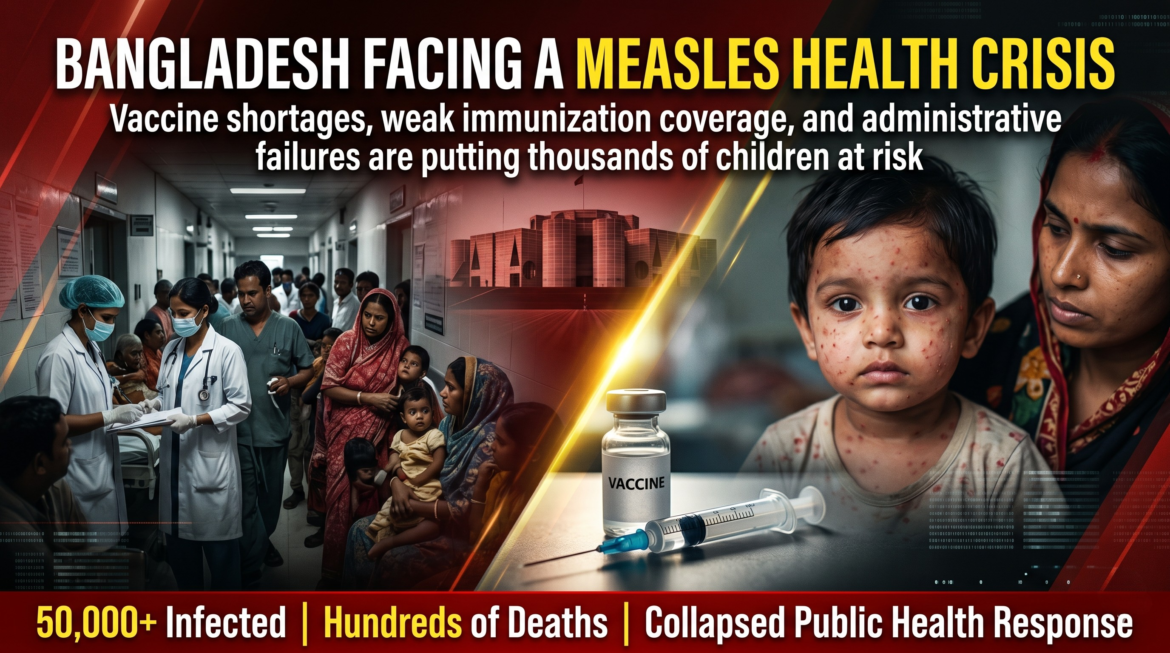
Bangladesh is currently confronting one of the gravest healthcare emergencies in recent memory. A devastating measles outbreak, shortages of vaccines and testing kits, disruption in medical imports, and growing child mortality have triggered nationwide concern and political debate over the future of the country’s public health system.
At the center of the debate is a sharp comparison between the healthcare stability maintained during the Awami League government from 2009 to 2024 and the severe disruptions witnessed under the current interim administration between 2024 and 2026.
From Stability to Crisis: A Dramatic Shift in the Health Sector
For more than a decade, Bangladesh’s Expanded Programme on Immunization (EPI) was internationally recognized as one of South Asia’s major public health success stories. Under the Awami League government led by Prime Minister Sheikh Hasina, vaccination programs expanded nationwide, community clinics were strengthened, and routine immunization coverage remained relatively stable.
Public health analysts often highlighted several achievements during that period:
- Nationwide EPI vaccination coverage
- Regular distribution of Vitamin A capsules
- Expansion of more than 14,000 community clinics
- Improved maternal and child healthcare access
- Availability of anti rabies vaccines and anti venom supplies
- Consistent import and supply chains for essential medicines
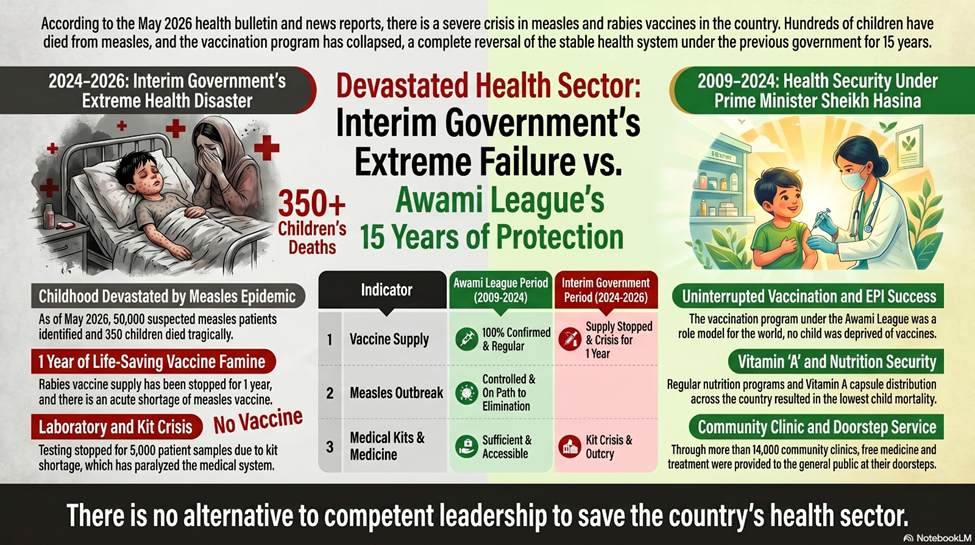
Many health experts argued that these systems helped Bangladesh significantly reduce child mortality and improve healthcare access in rural areas. However, since the political transition and the formation of the interim administration in 2024, critics claim the country’s healthcare management system has rapidly deteriorated.
Measles Outbreak Reaches Alarming Levels
According to health bulletins and media reports from May 2026, suspected measles cases across Bangladesh have exceeded 50,000, while hundreds of children have reportedly died from complications linked to the outbreak.
Dhaka Division remains the epicenter of the crisis, although infections are rapidly spreading through Rajshahi, Chattogram, Khulna, and multiple rural districts.
Doctors warn that hospitals are becoming overwhelmed as increasing numbers of children arrive with:
- High fever
- Severe respiratory complications
- Pneumonia
- Dehydration
- Skin rashes and infections
- Malnutrition related complications
For many families, the crisis has become deeply personal. Parents are expressing anger over the lack of vaccines, delayed treatment, and shortages of testing kits.
Vaccine Supply Chain Collapse
One of the strongest criticisms directed at the interim administration involves the collapse of vaccine procurement and supply systems.
Health workers and policy analysts report that several essential vaccine programs have been severely disrupted.
Rabies Vaccine Crisis
Bangladesh sees nearly 500,000 to 600,000 dog bite incidents every year. Under previous healthcare systems, anti rabies vaccines were regularly supplied through public hospitals.
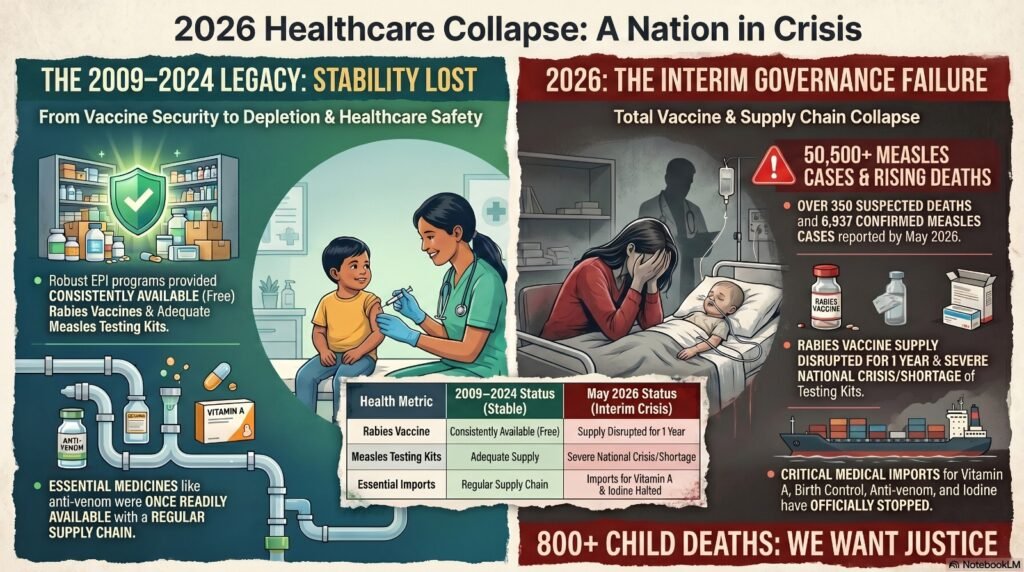
However, reports suggest that the supply of rabies vaccines has remained disrupted for nearly a year, placing thousands of lives at risk.
Measles Vaccination Disruptions
Critics also argue that interruptions in routine immunization campaigns have contributed directly to the explosive rise in measles infections.
Several healthcare experts claim that delays in procurement decisions, administrative instability, and lack of coordination with international health agencies weakened the country’s ability to respond quickly to the outbreak.
Testing Kit Shortages and Healthcare Paralysis
The healthcare emergency has been worsened by a severe shortage of laboratory testing kits.
Thousands of suspected measles samples reportedly remain untested due to insufficient diagnostic capacity in government hospitals.
As a result:
- Patients are being diagnosed late
- Community transmission is increasing
- Accurate outbreak tracking has become difficult
- Mortality risks are rising
Doctors describe the situation as a dangerous breakdown in disease surveillance infrastructure.
Nutrition Crisis and Vitamin A Shortages
Another major concern involves disruptions in nutrition support programs, particularly Vitamin A distribution for children. Under earlier national health campaigns, Vitamin A supplementation was widely promoted to strengthen immunity and reduce child mortality. Public health specialists now warn that shortages and interruptions in these programs are making children more vulnerable to severe measles complications. Malnutrition combined with infectious disease has created what many experts describe as a “dual health emergency.”
Shortages of Essential Medicines
The crisis has spread beyond measles and vaccines.
Reports from hospitals and healthcare professionals indicate shortages in:
- Anti venom for snakebite victims
- Radioactive iodine treatment for thyroid cancer
- Birth control supplies
- Emergency imported medicines
- Diagnostic and laboratory materials
These shortages have intensified fears that Bangladesh may face multiple overlapping public health crises if supply chains are not restored quickly.
Political Debate Intensifies
The healthcare crisis has become one of the most politically sensitive issues in the country.
Supporters of the Awami League argue that the current situation demonstrates how years of healthcare infrastructure and vaccination stability have been weakened within a short period under the interim administration. They point to uninterrupted vaccine programs, stable EPI management, and community healthcare expansion during the 2009 to 2024 period as evidence of long term institutional success.
Meanwhile, critics of the interim government accuse authorities of administrative paralysis, poor crisis management, and failure to respond to early warnings from international organizations such as UNICEF.
Public anger has grown further following allegations that controversial changes in procurement systems and delays in approving vaccine imports contributed to the current shortages.
Rising Public Anger and Demand for Accountability
As reports of child deaths continue to emerge, demonstrations and protests have begun in several areas demanding accountability for failures in the healthcare system.
Citizens, doctors, and health activists are demanding:
- Immediate restoration of vaccine supplies
- Emergency nationwide immunization campaigns
- Rapid import of testing kits and medicines
- Transparent investigation into procurement failures
- Stronger coordination with global health organizations
- Long term healthcare reforms
Many observers warn that restoring public trust may become increasingly difficult if the crisis continues to worsen.
Bangladesh’s ongoing healthcare emergency has evolved into both a humanitarian and political crisis. The rapid rise in measles infections, collapse of vaccine supply systems, shortages of essential medicines, and increasing child mortality have exposed deep vulnerabilities within the country’s healthcare infrastructure.
The growing comparison between the Awami League era’s relatively stable healthcare system and the disruptions experienced under the interim administration now dominates public debate across the country.
Health experts emphasize that immediate action is necessary to stabilize vaccine supplies, restore testing capacity, strengthen nutrition programs, and rebuild confidence in public healthcare institutions. Without urgent intervention, Bangladesh risks facing a prolonged national health catastrophe with devastating long term consequences for its children and future generations.