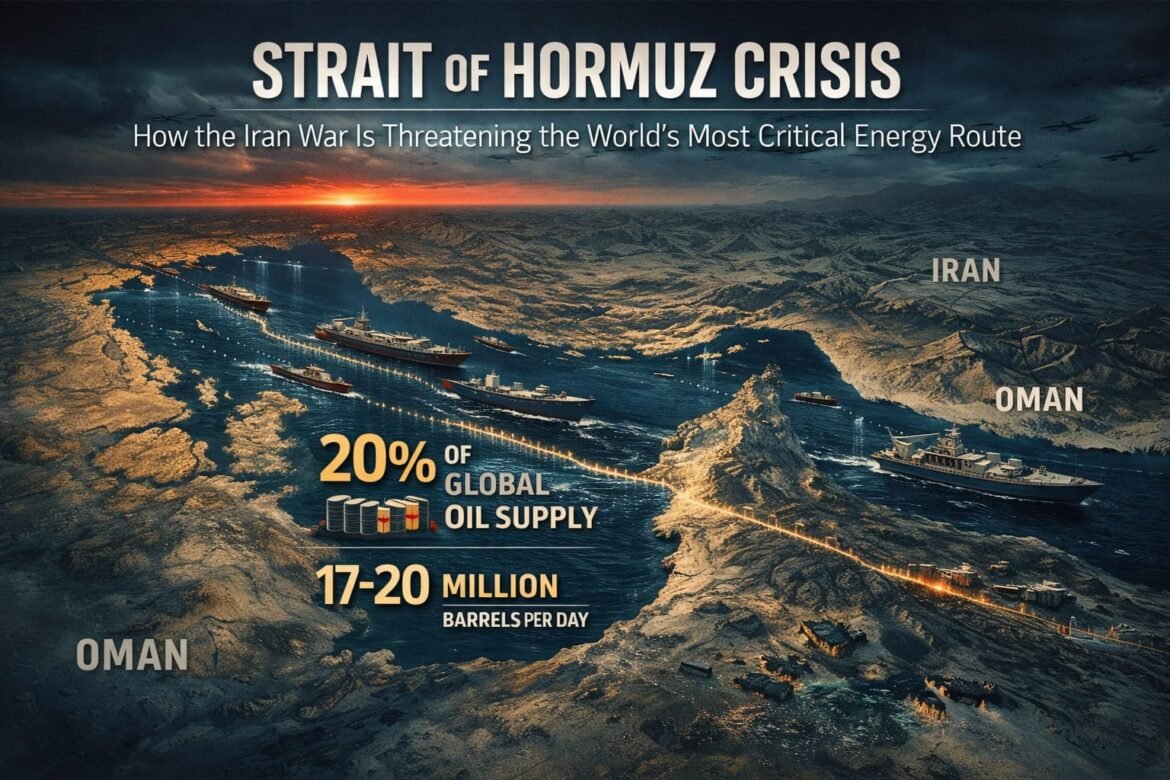
1️⃣ IntroductionThe Strait of Hormuz, a narrow maritime corridor between Iran and Oman, has emerged as the central pressure point in the ongoing Iran war. The waterway handles roughly one-fifth of the world’s oil supply and large volumes of liquefied natural gas, making it the most strategically important energy chokepoint on Earth.In recent days, the conflict between Iran, the United States and Israel has dramatically disrupted maritime traffic through the strait. Tanker movements collapsed from about 37 ships per day to near zero, triggering a surge in oil prices and raising fears of a global energy shock.The crisis has already stranded hundreds of vessels, forced shipping insurers to raise war-risk premiums sharply, and prompted Washington to consider military escorts for tankers attempting to transit the corridor.2️⃣ Global Energy DependencyThe Strait of Hormuz is the most important route for global oil exports.Global Oil TransportStrait of Hormuz: 20% of world oil supplyOther routes: 80%Key data:Daily oil flow: ~20 million barrelsMajor exporters: Saudi Arabia, UAE, Kuwait, Iraq, IranMajor importers: China, India, Japan, South KoreaQatar, one of the world’s largest LNG exporters, also ships most of its natural gas through the same corridor.3️⃣ U.S. Energy ExposureAlthough the United States imports less Middle Eastern oil than in previous decades, its economy remains sensitive to global oil price shocks.Impact channels• Oil price inflation• Higher gasoline prices• Stock market volatility• Global supply chain disruptionsRecent market reactions already show this effect, with oil prices moving toward $90 per barrel and energy markets becoming increasingly unstable.4️⃣ Current War ContextThe crisis escalated after U.S. and Israeli strikes on Iranian military infrastructure, which transformed long-running tensions into open confrontation.Iran responded with:• Missile strikes• Drone attacks• Maritime threats targeting commercial shippingSeveral vessels have already been damaged and shipping companies have begun suspending operations through the region.As a result, the Strait of Hormuz has effectively become the primary battlefield for economic warfare.5️⃣ Shipping Disruption Right NowTanker traffic through the strait has collapsed.Before conflict: ~37 ships per dayCurrent level: near zeroImmediate impacts:• 150+ tankers stranded• Hundreds of ships anchored outside the strait• War-risk insurance costs rising sharply• Severe shipping delaysInsurance premiums have increased from about 0.25% of vessel value to nearly 3%, costing millions of dollars per voyage.6️⃣ Iran vs U.S. Military DeploymentThe Strait of Hormuz is now witnessing a growing military standoff between U.S. naval forces and Iran’s asymmetric naval units.U.S. Military Presence• US Fifth Fleet (Bahrain)• Aircraft carrier strike groups• Aegis missile defense destroyers• Attack submarines• Maritime patrol aircraftIranian CapabilityIran relies heavily on asymmetric tactics:• Fast attack boats (swarm attacks)• Naval mines• Anti-ship missiles• Drone swarms• Coastal missile batteriesIran’s strategy is not to defeat the U.S. Navy directly but to make shipping too dangerous for commercial vessels.7️⃣ Economic ConsequencesThe disruption of Hormuz is already affecting global markets.Major impacts:• Rising global oil prices• Shipping companies suspending routes• Surging insurance costs• Supply chain disruptionsEnergy experts warn that prolonged disruption could destabilize global economic stability.8️⃣ Strategic ScenariosThe future of the Strait of Hormuz will determine whether the Iran war remains regional or becomes a global crisis.Possible scenarios:Limited disruption → Higher oil pricesDrone and missile attacks on ships → Severe maritime disruptionNaval mines deployed → Partial closure of the straitFull blockade → Global energy crisisEven a temporary closure would send shockwaves through the global economy.ConclusionThe Strait of Hormuz has long been considered the most sensitive energy chokepoint in the global economy.Today, the escalating confrontation between Iran and the United States has transformed that vulnerability into an immediate strategic crisis.If disruption continues, the consequences will extend far beyond the Middle East—affecting energy prices, global trade, and economic stability worldwide.