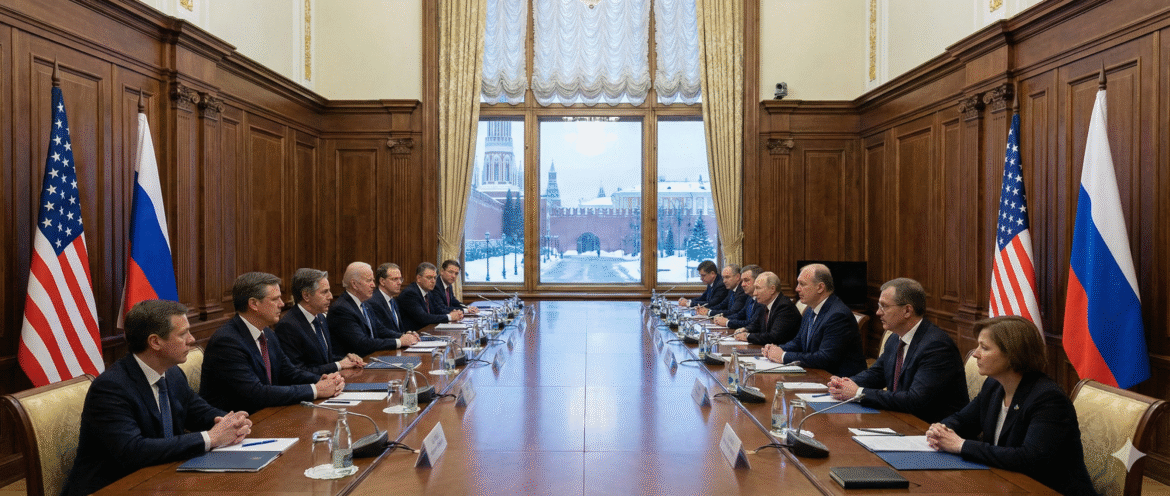
The war in Ukraine has entered a critical diplomatic phase as Steve Witkoff, the United States’ special envoy, arrives in Moscow for a high-stakes meeting with Russian President Vladimir Putin. The meeting comes amid mounting international pressure for a negotiated end to the nearly four-year conflict.
After weekend negotiations in Florida between U.S. and Ukrainian officials — described by the U.S. Secretary of State as “productive” — the focus now shifts to rapprochement with Moscow. The aim: to present a revised peace framework that could pave the way for a ceasefire.
Originally drafted as a 28-point plan, heavy criticism from Kyiv and European allies pushed Washington to rework the proposal. The revised version reportedly offers concessions to Ukraine’s core concerns while leaving the door open for negotiations with Russia.
The upcoming meeting between Witkoff and Putin is being closely watched globally — not only by wartime partners but also by neutral powers — for several critical reasons:
- Territorial integrity & sovereignty: Ukrainian President Volodymyr Zelenskyy reiterated strongly that any deal must respect Ukraine’s sovereign borders. Moscow’s continuing advances on the battlefield, coupled with claims over key territories like Pokrovsk and Vovchansk, have further complicated negotiations.
- Security guarantees: Kyiv wants binding guarantees from major allies to prevent future aggression — a point underscored by repeated demands in discussions with Western leaders.
- European concerns: Officials in Brussels have cautioned that pushing for a quick deal could force Ukraine into uneven concessions. For many EU policymakers, granting Russia territorial gains as the price of peace remains unacceptable.
🔹 What to Watch For
- Clarity on concessions and guarantees: Whether the revised peace plan includes territorial compromise from Kyiv, and if so, what security or economic guarantees Ukraine — and Europe — receive in return.
- Russian stance on new proposals: Whether Moscow accepts the updated framework, or demands more — potentially causing a reset of negotiations or a collapse of talks.
- European and NATO reactions: Their support or opposition could influence Ukraine’s willingness to compromise; EU leaders have already signaled discomfort with proposals that may reward Russian aggression.
- Human-rights and prisoners issue: Amid negotiations, concerns have risen about including the fate of political prisoners in any agreement — a factor urged by human-rights advocates and Nobel laureates.
🔹 Why This Matters
A breakthrough could end years of devastating conflict, stabilize European security architecture, and open pathways for reconstruction and reintegration. For global diplomacy, success would signal an effective U.S.-led mediation model — but a failed deal could embolden further aggression, deepen mistrust in international law, and spark prolonged instability across Europe and beyond.
For Kyiv, the stakes are existential: sovereignty, territorial integrity, national identity, and civilian survival. For Moscow, the talks are a chance to lock in strategic gains while minimizing sanctions pressure.
As the world watches, the next 48 hour meeting could reshape the post-war global order — or set the stage for even greater turmoil.